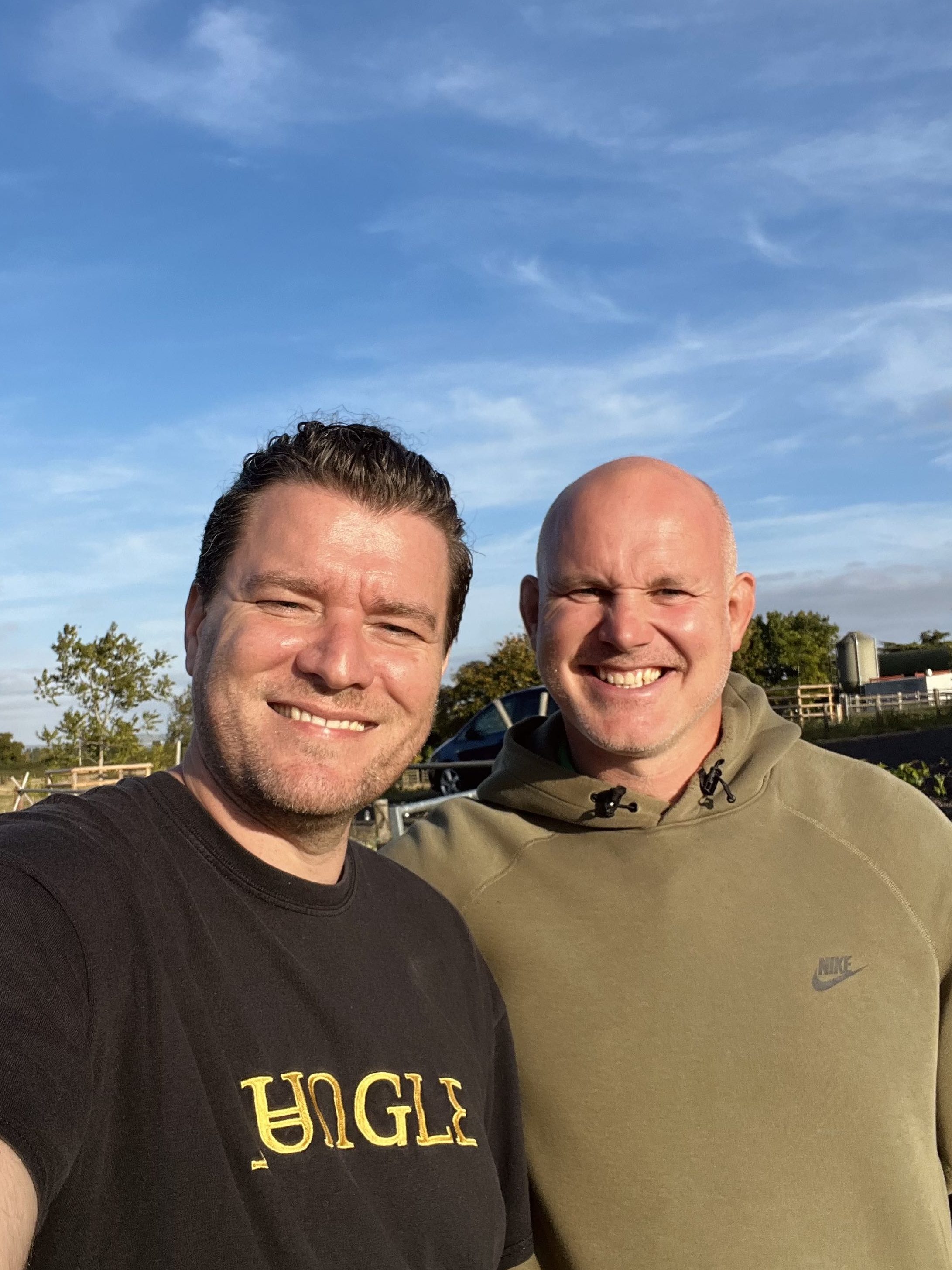
In 2024, I performed live percussion at a music evening on Lopemede Farm, a stunning location in Oxfordshire. The moment I arrived, I felt a powerful energy – like something meaningful was unfolding on that land.
Greg and Jess of Firelight host wellbeing and feel-good events on this farm. They deserve a blog post to themselves so stay tuned for that.
I’m deeply curious about how systems work – especially the ways people, land, projects and energies are all connected. How does this place feel like it does? Who is behind this farm? My aim with this blog is to shine a light on people doing good things. Without further ado let’s talk community wellbeing on regenerative farms with Eddie.
Eddie Rixon – A regenerative farmer
Eddie is a tall chap and it’s not often I’m greeting somebody at eye-level. A firm handshake and a big, open smile already answered a few questions for me.
Eddie Rixon is a fourth-generation farmer with a mission to regenerate the land for all species. With a background in the food industry and a degree in Agriculture from the University of Reading – Eddie brings fresh insight to the challenges of modern farming.
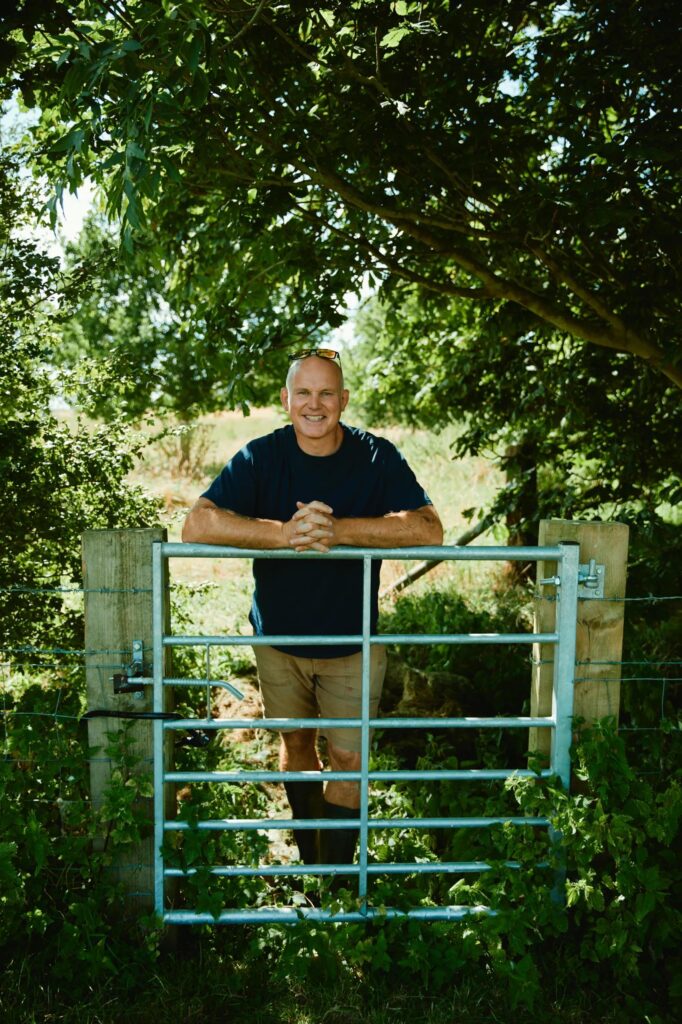
A personal mental health crisis became a turning point – both for Eddie and for Lopemede Farm. Incredible change is happening on the land. I wanted to pause and talk to Eddie about the journey that led here. Mental health and wellbeing in farming is a pressing issue. Farmers manage 70% of the UK’s land but often lack the support they need. The Farm Safety Foundation found that 95% of young farmers see poor mental health as the industry’s biggest hidden problem.
Let’s hear more from Eddie:
Q1: What was it that lead to your turning point in farming, and how did it change your approach to land, wellbeing, and life in general?
The turning point was a series of events back in 2017. A tuberculosis breakout in our cattle, an arson attack on our butcher shop, and the following week I tragically found a lady dead on our farm. Those three events, along with my mum passing away led to a mental breakdown. I was really at that juncture in life where I could either numb it out, or deal with the trauma. A good friend of mine saw I was struggling and recommended a charitable organisation called Mankind Project. This led to a spiritual awakening.
That experience opened me up to a new vision for the farm. A path focused on restoring nature and creating meaningful opportunities for people to reconnect with the natural world. I fell into a more purposeful direction in life – the beginning of a 30 year plan. The real driver was my children, how could they, not only survive, but thrive?
Q2: How does the regeneration of the land play a role in both the physical land and the lives of the community?
Through my own mental health crisis, I became aware that the farm could be place to benefit planetary and human wellbeing. The farm has become a thriving ecosystem for wildlife through shifting its energy and regenerating the land. It’s become a healing space where people reconnect with nature. We’ve seen firsthand how this connection supports mental and physical wellbeing.
Q3: Why do you believe it’s important for farmers to reconnect people with the land?
It’s about community! When I look at photos from previous generations, the farm was a community hub. People used to socialise and celebrate on the land – and connect through the production of food. The result was an intrinsic connection and understanding of where there food came from.
Farmers manage 70% of the UK’s land, yet decades of industrial agriculture have weakened their connection to local communities. Now, as the UK faces a major agricultural transition – with EU subsidies gone – it’s crucial for farmers to rebuild their ties to food, farming, and nature while finding new, innovative ways of making money through the land. Regenerative farming offers a sustainable, innovative path forward. The race to the bottom with food is only going to go down as retailers pay less and less. Farms can only survive by reconnecting with their communities and the land – and by turning nature connection into a source of both healing and income.
Q4: Can you share how opening your farm to wellbeing and creative events has impacted the community?
Every time I visit Thame or attend local events, I meet people who tell me how the farm has improved their mental health. Whether through our sauna, yoga or sound sessions, or music events. Their stories fuel my purpose. On hard days, I remember the ripple effect we’re creating – positive change that reaches far beyond the farm. That tells me I’m on the right path.
Q5: How does your work support others in the farming community who may be struggling?
I’m always really keen to share my story because I think it’s really important to share how I got to the point of changing our farming philosophy. It was through struggle – it was through a mental breakdown. So I’m always transparent about that and also how we measure our success. Previously that was only economically but now we do that socially, ecologically and also a place of inspiration. Are we inspiring people who come here to make change?
Q6: You mentioned that farmers are responsible for some 70% of the land in the UK – what responsibility do you feel comes with that?
That’s a big responsibility, especially considering the state of both planetary and human health right now. The UK is one of the most nature-depleted and nature-disconnected countries in Europe. Farmers have a huge role to play in reversing that. I definitely felt overwhelmed by that – especially before my own mental health breakdown. Over time, I came to see that taking care of the land isn’t just about the environment. It’s about supporting the health and wellbeing of our communities. It’s about setting an example for future generations, including my own children. That is powerful motivation – to be a force for change and to inspire other farmers to see what’s possible.
Q7: How can the community get involved to support and enrich what you are doing?
Interestingly, we recently launched up a community interest company called Future Oaks. The whole premise of this was to set up a charitable organisation whereby we could get funding from both private and public money to really help children and adult’s lost connection with food farming and nature. This is really critical for me. We’ve just secured our first funder from an organisation in London. They will be bringing groups of children from Hackney out to a farm. A place where some of these children have never been before, which will be a rich experience for them. We’ll also be engaging with our locals to volunteer and to put back into their community to help others who are less fortunate, whether deprived or from a disadvantaged background.
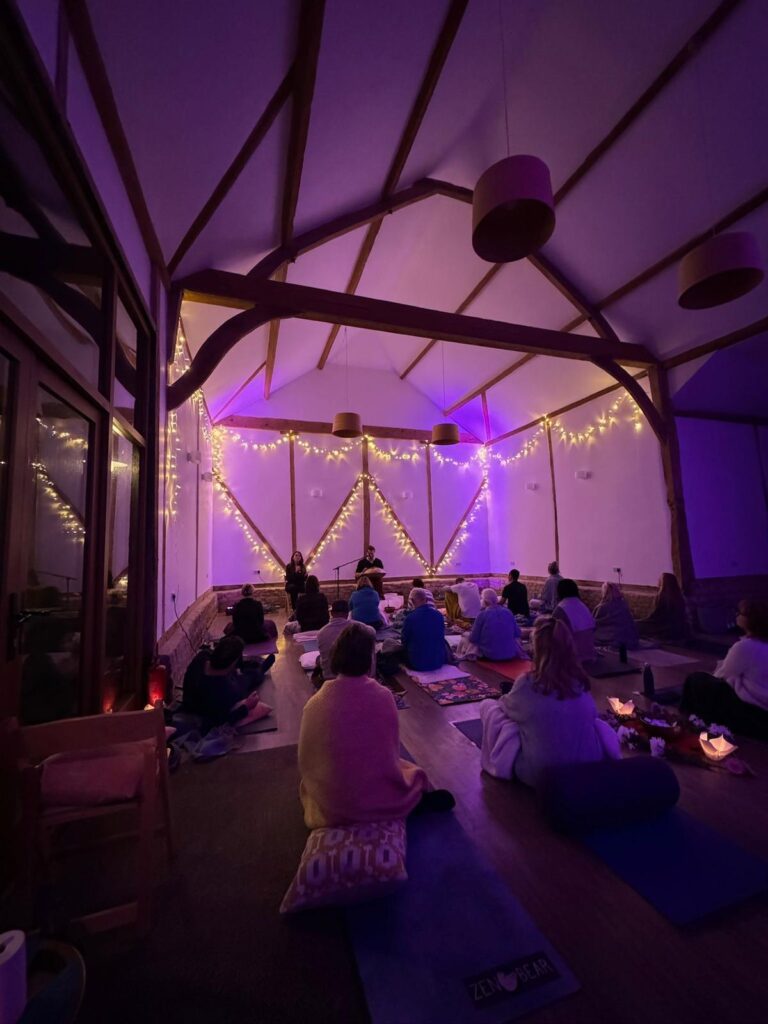
Q8: I have to ask – your first group sound meditation experience in the barn – how was it, what stayed with you from that experience?
For me that barn brings back memories of my mum. In the session I fell quite quickly into a deep sleep. What struck me was this connection with my mum who passed in 2014. I journeyed with her, reminiscing on all of the times in that barn with her and my dad. I know I went into a really deep sleep. I enjoyed this warm, emotional connection with my mum. I was very close with her and she was a large inspiration in my life.
Q9: Something I ask everybody who stops by the Soundbites Blog: What is the most important piece of advice you would like to share with our readers?
Slow down. Simply – slow down, be more present. Connect with nature and connect with your senses and your emotions. I do this through a discipline I called a ‘sit spot’. Of two places on the farm, the one I visit the most is just outside my house under a thatched roof surrounding a tree. I watch the sun come up while looking over to the Thame church where my mum is buried. I use this practice quite simply to be quiet. To get out of my head. I listen to the birds. I enjoy the warm sun on my face as it rises, and the wood of the bench beneath me. Just allowing whatever needs to come up to come up and bearing witness to that experience. So yep – slow down, be more present.